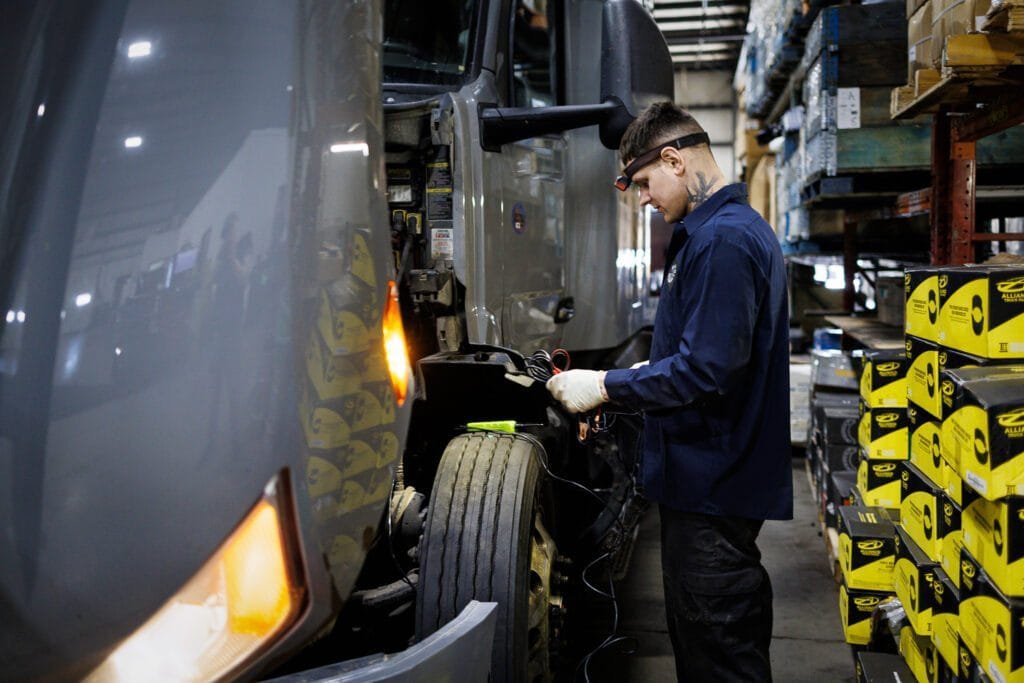
If you've had a tractor quit between the Joliet intermodal yards and a Bolingbrook dock, you already know the question is who can fix it today, close enough that the driver isn't burning hours of service getting there. Truck repair in Romeoville, IL is what Truck Clinic does all day: fifteen in-house services for trucks and trailers from one shop off I-55 in Will County. The shop itself (access, hours, what to bring) has its own Romeoville location page, and fleets based down the corridor have pages for Joliet and Bolingbrook.
Where do you get truck repair in Romeoville, IL?
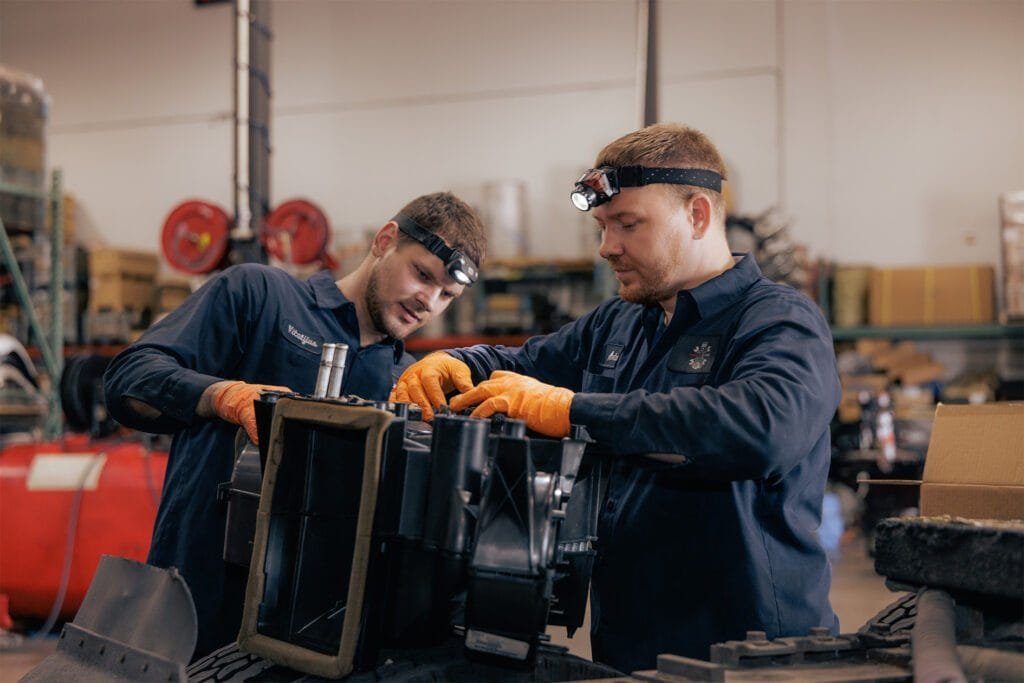
Truck Clinic is at 565 Anderson Dr Unit B, Romeoville, IL 60446, on the I-55 and I-355 corridor, open Monday to Friday 7:00 AM to 5:00 PM and Saturday 7:00 AM to 12:00 PM, closed Sunday. The team is 65+ employees and every job is done in the bay: no roadside truck, no mobile service, no pickup or delivery, so the unit arrives on its own wheels or behind a wrecker. As of October 2026 the shop holds a 5.0 average across 203 Google reviews.
The fifteen services and what usually brings each one in:
- Diagnostics: check-engine and stop-engine lamps, J1939 codes, intermittent faults
- 5 MPH derate resets: SCR inducement derates, and the repair before the reset
- DPF cleaning and replacement: soot-load codes, aborted regens, cracked substrates
- Diesel engine repair: coolant loss, low oil pressure, heavy blowby
- Transmission and differential repair: slipping clutches, a howl that follows road speed
- Electrical repair: parasitic draws, corroded connectors, ABS lamps
- Truck and trailer repair and alignments: cracked crossmembers, toe and thrust angle out of spec
- Suspension: broken leaf springs, torque rod bushings, leaking air bags
- Brake repair: shoes, drums, slack adjusters, chambers and air leakdown
- Tire mounting and balancing: irregular wear, steer tire replacement
- Oil changes: interval service and a look underneath
- Heating and A/C: weak defrost, a compressor clutch that will not engage
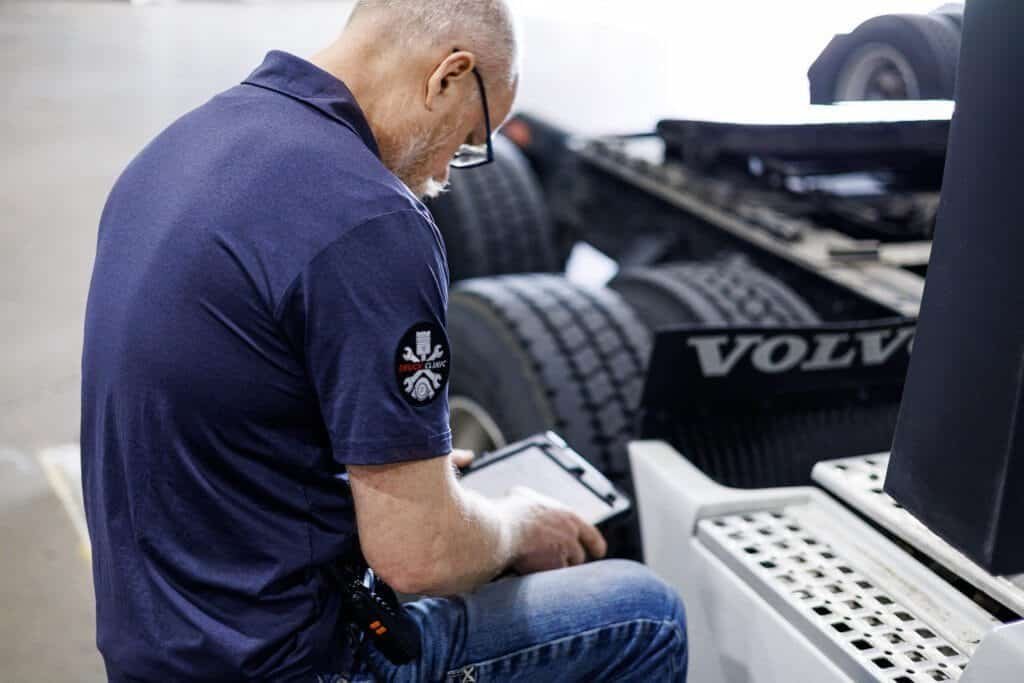
- DOT inspections: annual truck and trailer inspections, and the repairs they turn up
- Fleet maintenance: scheduled PM programs for multi-unit operations
What to expect once the truck is in the bay
Two things are the same on every job: the quote is written before work starts, and nothing is opened or ordered until you approve it. If the teardown finds something the quote did not cover, you hear about it before the work continues. Turnaround is same-day when a bay is open, and never promised, because that promise is how a brake job gets rushed.
Does a Romeoville shop cover truck repair in Joliet, IL and Bolingbrook?
Yes. Truck Clinic works on trucks from Romeoville, Bolingbrook, Joliet, Naperville, Plainfield, Aurora, Lockport, Lemont, Woodridge and Chicago. Bolingbrook is the next stretch of I-55 north of the shop and Joliet the next stretch south, toward the I-55 and I-80 interchange, so for a truck already running the corridor the shop is on the way rather than a detour.
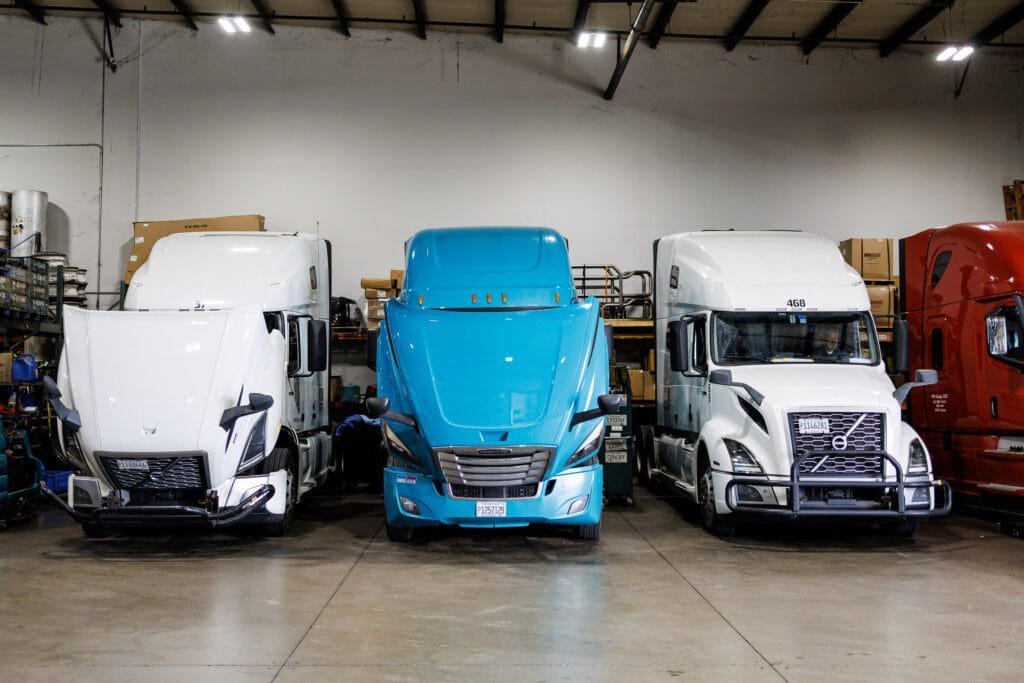
Around Joliet, semi truck repair mostly means drayage units: day cabs pulling containers between the intermodal terminals south of town and the warehouses along I-55 and I-80. Those trucks run short loops all day and idle in gate queues, and that duty cycle produces DPF soot-load codes and drive-axle brakes out of adjustment. Truck repair in Bolingbrook leans toward distribution and last-mile units, where backing into docks all shift turns into suspension, alignment and trailer-light work.
The other question is dealer versus independent. A dealer may be the only route for a software-locked calibration; for the brakes, aftertreatment, electrical and chassis work that fills most repair orders, a shop on the lane lets the driver drop the unit between loads. How to choose a commercial truck repair shop covers the questions to ask.
What does the Will County duty cycle do to a truck?
Will County trucks do not fail the way over-the-road trucks fail. An OTR tractor runs hot and steady, so the DPF cleans itself on the highway and the brakes see little use between exits. A drayage tractor doing yard-to-dock loops never gets exhaust temperature up, stops every few minutes and turns tight in potholed yards. Same truck, different wear.
| Corridor pattern | What wears first | What it looks like in the bay |
|---|---|---|
| Short yard-to-dock loops at low exhaust temperature | DPF, drive-axle brakes | Passive regen never completes; soot-load code (SPN 3719), then a regen-inhibit derate; thin linings, heat-checked drums |
| Gate queues and dock idling | DEF system, batteries | DEF crystals at the doser tip, NOx sensor faults, SCR efficiency code (SPN 4364); batteries never fully recharged |
| Yard potholes, curbs and dock approaches | Suspension, alignment, steer tires | Broken leaf springs, worn torque rod bushings, kingpin play; inside-edge steer wear from toe out of spec |
| Several trailer swaps a day | Fifth wheel, air lines, seven-way plug | Slow leaks at the gladhands, trailer ABS lamp on, marker lights out |
| Winter salt and brine | Connectors, brake hardware, frame | Intermittent electrical faults, seized slack adjusters and cam bushings, crossmember corrosion |
The maintenance answer is intervals set by the duty cycle, not the odometer. How far the DPF cleaning interval moves for a short-loop truck is the clearest example, and a fleet maintenance program for corridor units should check brakes and aftertreatment more often than the OEM schedule assumes.
Brakes count twice: worn linings are a repair, and a brake out of adjustment at a roadside inspection is a violation on the carrier record. Brake systems lead the vehicle out-of-service categories in CVSA International Roadcheck results year after year, and a slow air leak found with a leakdown test during a PM is one fewer of those.
What should a driver do when a truck breaks down on I-55?
Truck Clinic does not send anyone out to the shoulder, so the job on the road is getting the unit to the shop without turning a sensor fault into an engine. Give drivers this sequence and the authority to follow it:
- Get off the travel lanes and set the triangles. Shoulder, ramp or the next exit if the truck still moves. Warning devices have to be out within ten minutes of stopping under 49 CFR 392.22.
- Read the dash before deciding anything. A red stop-engine lamp, low oil pressure, high coolant temperature or a countdown to a 5 mph derate means the truck is done moving on its own. An amber check-engine lamp with normal gauges usually allows a limp in at reduced speed; what the derate code means decides which case you are in.
- Check the air gauges. If pressure will not build past the low-air warning, or drops noticeably with the engine off, the spring brakes will set on the road. That is a tow, not a limp.
- Call dispatch, and let dispatch call the shop and the wrecker. Dispatch has the tow operators on file and can line up a bay while the driver deals with the truck.
- Send the truck in with the codes, the complaint and the last PM record. A photo of the dash lets the shop pull likely parts before the truck arrives.
How should a fleet plan for a breakdown on I-55 or I-80 before it happens?
Most units that arrive on a hook were showing a symptom before the tow: a longer crank, a regen that kept aborting, a brake that pulled to one side. Scheduled work in a bay costs less than the same job after a tow, and it happens on your calendar instead of the truck's. For the breakdowns that get through anyway:
- Two or three heavy-duty tow operators on file, the closest to Joliet, Romeoville and Bolingbrook marked, numbers in every cab
- The shop's address and phone in every cab and in dispatch's system: 565 Anderson Dr Unit B, (815) 887-0212
- A written wait, limp or tow rule, so the driver is not guessing at 2 AM
- Telematics fault codes forwarded to whoever books repairs, so a derate countdown shows up before the driver calls
- The unit file ready to send: VIN, engine serial, mileage, last oil change, last annual inspection date
- A downtime number per truck-day, so nobody argues about the tow; what a breakdown really costs is the math
- The October checkup booked before the first freeze; winter prep for Chicago-area trucks lists what to check
Talk to Truck Clinic
If you run trucks on I-55, I-80 or I-355 and want a shop that puts the quote in writing before anything is opened, call Truck Clinic at (815) 887-0212 or send the details through the contact page. We are at 565 Anderson Dr Unit B, Romeoville, IL 60446, and we work on trucks from Joliet, Bolingbrook, Plainfield, Lockport, Naperville, Aurora and Chicago.