Truck repair · Romeoville, IL
Truck diagnostics in Romeoville, IL
Full-module scans and pin-point tests that find the cause behind a check engine light, not just the code.
5.0 from 203 Google reviewsWritten quote before work65+ person team
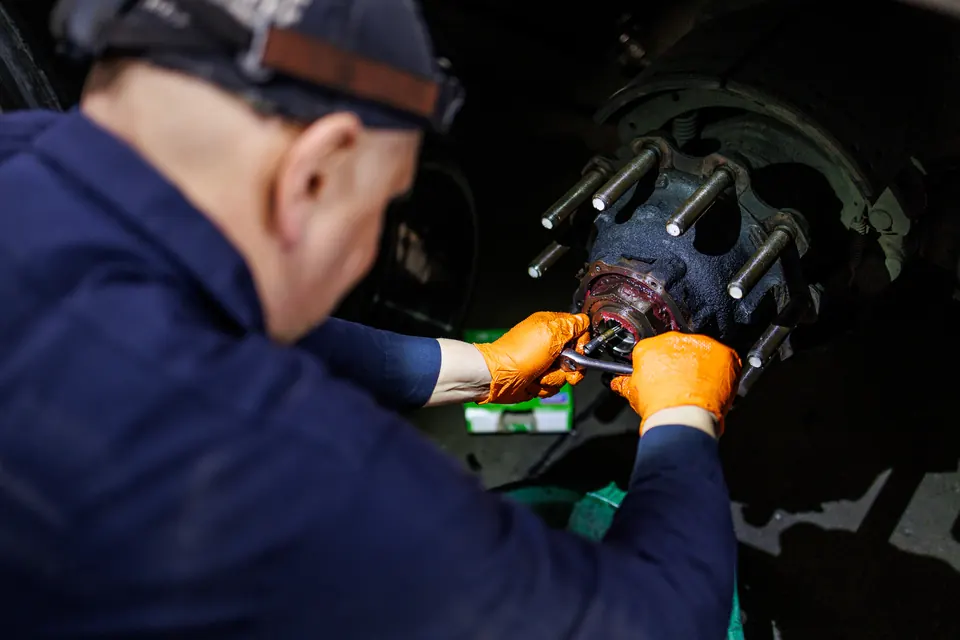
Check-engine light back after the codes were cleared? Truck Clinic, truck repair in Romeoville, IL, provides truck diagnostics using live data, circuit checks and component tests to investigate the cause.
The full service description
Share the fault code and what the truck was doing when it appeared. We explain the findings and provide a written quote before repairs.
What's included
- Full-module scan: engine, transmission, ABS, body and aftertreatment
- Freeze frame, history and occurrence-count review
- Live data logging on the road or under load
- Bi-directional component tests and cylinder cutout
- Circuit and voltage-drop testing at the connector
- Written finding and quote before any part is ordered
What does a truck diagnostic appointment include at Truck Clinic in Romeoville?
Reading codes is the quick part; the work is proving which cause behind a code is the real one. A heavy duty diagnostic scan at our Romeoville, IL shop covers:
Read the full section
- Every module, not just the engine. Transmission, ABS, body and aftertreatment controllers each keep their own faults, and a chassis-side code often explains an engine-side symptom.
- Freeze frame and history. When the code set, at what RPM, load and coolant temperature, and how many times it has set and cleared.
- Live data on the road or under load. Boost against commanded, rail pressure against demand, NOx in and out, DPF differential pressure, EGR position.
- Bi-directional and component tests. Commanding the EGR valve, the DEF doser, a cylinder cutout or a regen and watching whether the truck responds.
- Circuit tests at the connector. Voltage drop, resistance and pin fit on the harness the code points at, because a corroded pin sets the same code as a dead sensor.
If the answer is the engine, the same bay handles the diesel engine repair.
What is a semi truck check engine light actually telling you?
A semi truck check engine light is one phrase for several lamps with different urgency:
Read the full section
| Lamp | What set it | What it asks of the driver |
|---|---|---|
| Amber check engine (MIL) | An emissions monitor failed: sensor, EGR, DPF, DEF or SCR | Finish the run, book a scan, watch for a derate lamp |
| Amber engine warning | A non-emissions fault: a sensor out of range, a stored transmission or ABS code | Same, and note what the truck was doing |
| Red stop engine | Low oil pressure, high coolant temperature, or a fault the ECM treats as engine-threatening | Pull over, shut down, do not drive to the shop |
| DEF lamp or derate countdown | A DEF level, DEF quality or SCR efficiency inducement has started | Time-limited; torque goes first, then speed |
EPA heavy-duty rules require the engine to monitor its own emissions controls and light the lamp when one fails, which is why so many amber lamps trace back to the aftertreatment. Once the lamp becomes a torque or speed cut, the 5 mph derate reset page covers what happens next.
Why does a fault code by itself not tell you which part failed?
A J1939 code names a parameter (SPN) and how it failed (FMI), not a part. Three examples that reach Romeoville after a parts swap did not work:
Read the full section
- A NOx sensor code that was not the sensor. An outlet NOx reading high can be a failed sensor, a doser that is not spraying, diluted DEF, or a catalyst that is done. Replacing the sensor fixes one of four causes.
- A boost pressure low code that was not the turbo. A split charge-air hose, a leaking intercooler or a stuck EGR valve sets the same code as a worn turbo. A boost leak test costs a fraction of a turbo.
- A cascade of codes from one bad ground. A corroded chassis ground can set sensor codes on several systems at once. Fix the ground and all of them clear; replace any one sensor and none do.
That is why we rule causes out in order, with a test for each. Our guide to diesel fault codes and root cause goes deeper on SPN and FMI.
How do you find an intermittent fault that never shows up in the bay?
The truck that runs for the technician and stumbles for the driver is the hardest diagnostic job. What works:
Read the full section
- Log it on the road. We record live data over a drive or leave a logger on for a shift, then look for the sensor that dropped out in the seconds before the fault.
- Reproduce the condition, not the symptom. Heat, vibration, a wet road and a full trailer each move a marginal connector; a heat gun on the harness or a wiggle test under load finds what a static scan cannot.
- Load the circuit. A wire that reads fine on a meter can drop out under current; voltage-drop testing with the circuit live finds green corrosion inside a crimp.
When the trail ends in a harness, connector or ground, the repair moves to our truck electrical repair bay for a proper pin, splice or ground repair, not a butt connector and tape.
What drives the cost of a diesel diagnostic?
A diagnostic quote follows how much testing it takes to reach a finding, and you hear that scope before we start:
Read the full section
- Hard fault or intermittent. A code with clean freeze frame data and a failed component test is quick. An intermittent that has to be reproduced takes drive time or a logger.
- Whether a test needs teardown. A cylinder contribution test is a software command; a leakdown test or an EGR cooler pressure test means removing parts.
- How many systems are involved. One aftertreatment code is one path; engine, transmission and ABS codes together need triage to find the one that caused the rest.
- What was already replaced. Three sensors thrown at a truck means the earlier work gets verified before we trust the data.
Testing usually costs less than the wrong part, and far less than the wrong part plus a tow.
How long does a heavy duty diagnostic scan take?
The scan itself is quick. The finding is what takes time, and it depends on the fault:
Read the full section
- Hard fault with a failed component test: often same-day when a bay is open, and we tell you at drop-off whether one is.
- Aftertreatment faults: the truck may need to reach exhaust temperature or complete a regen before the data means anything.
- Intermittent faults: plan on the truck staying long enough to reproduce the condition, or on a logger going out with the driver.
We do not promise a turnaround before we have seen the truck.
Should you drive to a truck diagnostic appointment with the light on?
For an amber lamp with no torque loss, yes: drive it in and note what the truck was doing when it lit. For a red stop engine lamp, a derate at the speed-limit stage, or a check engine light with smoke, a knock or a coolant smell, do not. We do not offer roadside assistance or mobile diagnostics, so a truck that should not move needs a tow to 565 Anderson Dr Unit B, Romeoville, IL 60446.
Read the full section
Fleets and owner-operators from Joliet, Bolingbrook, Plainfield, Lockport and the Chicago metro come to us because the shop sits just off I-55 and a scan that becomes a repair is not a second trip. Call (815) 887-0212 with the codes and the symptom, or send them through the contact page, and we will say whether it is safe to drive in.
Why it matters
- The cause behind the code, not a parts guess
- One visit from scan to repair, same shop
- Intermittent faults chased with data, not luck
- Nothing cleared that cannot be explained
Technical resources
- EPA heavy-duty engine and vehicle standards ↗
The federal rules behind heavy-duty OBD monitoring and the check engine lamp
- FMCSA vehicle inspection, repair and maintenance rules ↗
Systematic inspection, repair and maintenance requirements for commercial vehicles
What to expect
- 01
Record the symptom, the lamp, when it started and what has already been replaced
- 02
Scan every controller and pull freeze frame, history and occurrence counts
- 03
Watch live data under the condition that sets the fault: idle, load, road speed or exhaust temperature
- 04
Run component, bi-directional and circuit tests on the shortlist of causes
- 05
Deliver the finding in plain language with a written quote for the repair
- 06
Repair, clear the code, complete the drive cycle and confirm it stays off
Common problems we address
Several codes on different systems at once
We look for the shared cause first — a ground, a power feed or a network fault — because one bad connection can set codes on the engine, ABS and transmission at the same time.
The code came back after a new sensor
We test the circuit and the system the sensor was reporting on, since a sensor that reads high because the system really is out of spec will keep reporting it on a new part.
The fault only happens on the road
Data logging during a drive or across a shift captures the seconds before the fault, which a static scan in the bay cannot.
Your questions, answered
Can you drive a semi truck with the check engine light on?
With an amber lamp and no loss of power, usually yes: finish the run and book a scan. A red stop engine lamp means shut down and tow. A DEF or derate lamp is on a timer, so the truck will lose torque and then speed if the fault is not repaired. Call first if you are unsure which lamp you have.
What determines the cost of a truck diagnostic?
How much testing it takes to reach a finding. A hard fault with good freeze frame data and a failed component test is quick; an intermittent fault that has to be reproduced on the road, or a truck that has already had several parts replaced, takes longer. We tell you the diagnostic scope before we start and quote the repair in writing after.
Why did my check engine light come back after the code was cleared?
Clearing a code erases the record, not the cause. The ECM re-runs the monitor on the next drive cycle, sees the same out-of-range reading and sets the code again. On aftertreatment faults the inducement timer may also carry forward, so a cleared code can come back as a derate.
What is the difference between a handheld code reader and a shop diagnostic scan?
A handheld reader usually shows engine codes and little else. A shop scan reads every controller on the truck, pulls freeze frame and occurrence history, watches live data under load, and commands components such as the EGR valve, DEF doser or a cylinder cutout to see whether they respond. The code is the starting point; the tests are the diagnosis.
Does a heavy duty diagnostic scan cover the DPF, DEF and SCR system?
Yes. The aftertreatment controller is scanned with the rest, and the tests include DPF soot load and differential pressure, regen history, NOx in versus NOx out, DEF quality and a doser spray test. Those readings decide whether the truck needs a sensor, a DEF flush, a DPF cleaning or a derate reset.
Will you clear the codes without fixing the problem?
No. We do not clear a code we cannot explain, because the monitor will set it again and on inducement faults a cleared code can return as a derate with less time on the clock. We clear codes after the repair, run the drive cycle and confirm the lamp stays off.
Related services
Diesel engine repair
When the finding is the engine, the transmission or the differential
5 mph derate reset
The aftertreatment fault behind the derate repaired and the inducement cleared
Truck electrical repair
Harness, connector and ground repairs when the fault is in the wiring
Also serving fleets in Aurora, Bolingbrook, Joliet, Lemont, Lockport, Naperville and Plainfield, from the one shop in Romeoville.
Further reading
From the shop's own guides.
Quote first, then the work.
Tell us what the truck is doing.
A no-start, a derate counting down, a brake out of adjustment the week before an inspection, or a fleet that needs a maintenance schedule someone actually follows — send the fault code and the engine, or call (815) 887-0212, and you get a straight answer: bay today, part first, or tow. The diagnosis and the price come to you in writing, and nothing is opened up until you approve it.
(815) 887-0212Monday - Friday: 7:00 AM - 5:00 PM
Saturday: 7:00 AM - 12:00 PM
Sunday: Closed
Shop-based only — we don't run roadside or mobile service, so the truck comes to Romeoville. Same-day whenever a bay is open.
Request a written quote
Shop-hours callback. Nothing starts until you approve the quote.