Truck repair · Romeoville, IL
Diesel engine repair in Romeoville, IL
Diesel engine repair for commercial trucks: fuel, air, cooling and in-frame work, tested before parts are ordered.
5.0 from 203 Google reviewsWritten quote before work65+ person team
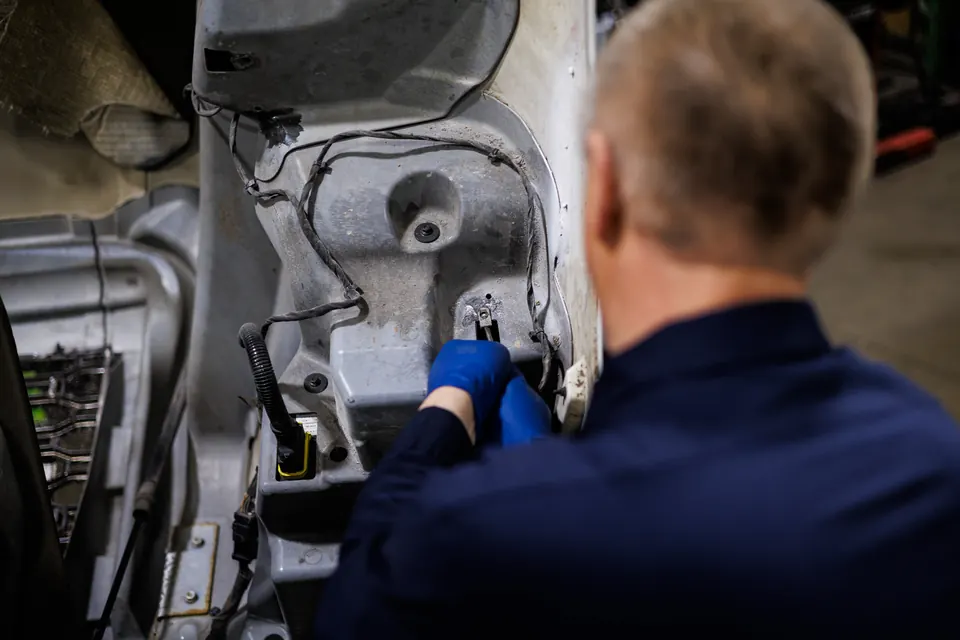
Losing power, burning oil or struggling to start? Truck Clinic provides diesel engine repair just off I-55, truck repair in Romeoville, IL.
The full service description
We investigate the fault before recommending parts and provide a written quote before repair work begins. Clutch, transmission, differential and final drive work is handled under transmission and differential repair.
What's included
- Engine diagnostics with cylinder contribution and leakdown testing
- In-frame overhauls and cylinder head reconditioning
- Turbo, injector, EGR and fuel system repair
- EGR cooler and coolant-loss testing
- Charge-air and boost leak testing
- Oil-consumption and blowby measurement
Get the right starting point for engine repair
An engine-repair estimate depends on diagnosis, component condition and parts availability. A fault code alone cannot establish whether a truck needs a sensor, a fuel-system repair or major engine work. Ask about the diagnostic scope, repair options and expected timing before authorizing work.
What to have ready when you call
- Truck make, model, year, VIN and engine model
- Fault codes and when the power loss, smoke, leak or noise started
- Recent repair history and oil or coolant consumption
- Whether the truck starts, moves normally or is already in a derate
Visit Truck Clinic
565 Anderson Dr Unit B, Romeoville, IL 60446
In-shop service for fleets and owner-operators around Romeoville, Bolingbrook, Joliet, Lemont and the I-55 corridor.
- Monday - Friday: 7:00 AM - 5:00 PM
- Saturday: 7:00 AM - 12:00 PM
- Sunday: Closed
What does diesel engine repair cover at a Romeoville, IL shop?
One shop should take a truck from a fault code to a running engine without guessing at parts along the way. At Truck Clinic in Romeoville, IL that means the whole engine, from the air filter to the exhaust manifold:
Read the full section
- Fuel and air: injectors, high-pressure fuel pumps, turbochargers, EGR valves and coolers, charge-air leaks.
- Cooling and lubrication: water pumps, oil coolers, low oil pressure, coolant in the oil.
- Cylinder work and in-frame overhauls: heads, liners, pistons, rings, bearings and seals.
- Engine sensors and wiring: the boost, rail-pressure, cam and crank sensors a code points at before it points at a part.
A turbo, injector or EGR failure usually sends oil or soot downstream, so the same bay handles the DPF cleaning and derate reset that follow and leaves the aftertreatment working the way EPA heavy-duty standards require. Clutch, gearbox, driveshaft and axle work has its own page, semi truck transmission and differential repair, and is done in the same building.
Which symptoms mean semi truck engine repair can't wait?
Most engines give notice; the early signs just look minor from the cab. What brings trucks into our Romeoville bays:
Read the full section
- Oil consumption that keeps climbing, with heavy blowby at the crankcase breather. That is rings, liners or a turbo seal, not age.
- Coolant loss with no puddle. If the overflow keeps dropping and the ground is dry, it is going internal: an EGR cooler, a head gasket, a liner seal or an injector cup.
- Smoke by color. Blue is oil (rings, turbo seals, valve guides). White that never clears after warm-up is coolant or fuel timing. Black under load is over-fueling or not enough air.
- A knock that changes with load or RPM. Bearing, wrist pin and injector knock each sound different, and none get quieter on their own.
If your symptom is a lamp and a torque cut, not a noise or a leak, start with truck diagnostics; the fix may not be the engine at all. The same goes for an engine that revs without the truck pulling: transmission slipping or grinding points at the clutch or gearbox before it points at the engine.
How is a diesel engine fault confirmed before a part is ordered?
A fault code names a circuit or a condition, not a part, and the symptoms of a weak injector, a leaking charge-air cooler and a tired turbo overlap from the driver's seat. So the engine is measured before anything is quoted:
Read the full section
| Test | What it measures | What it separates |
|---|---|---|
| Cylinder contribution (cylinder cut-out) | How much each cylinder adds at idle and under load | A weak injector from a low cylinder caused by fuel supply |
| Cylinder leakdown | Where pressurized air escapes from a cylinder at top dead center | Rings and liners (crankcase), valves (intake or exhaust), head gasket (coolant) |
| Blowby measurement | Crankcase gas flow at the breather under load | Ring and liner wear from a turbo seal leak that only looks like blowby |
| Boost and back-pressure | Charge-air pressure against spec, and exhaust restriction ahead of the turbine | A charge-air leak, a lazy turbo, a plugged DPF or a sticking variable-geometry turbo |
| Coolant pressure test | Whether the cooling system holds pressure cold and hot | An external leak from an EGR cooler, a head gasket or an injector cup |
| Oil sample | Fuel, coolant, soot and wear metals in the oil | How far a failure has traveled before the teardown |
The tests usually turn a long parts list into a short one. The result goes into a written quote with the parts options, and nothing is ordered until you approve it. If the symptom is only a lamp and a torque cut, the truck diagnostics page explains why the scan comes first.
Which engine repairs cause aftertreatment damage, and how is it checked?
Three engine failures do most of the damage downstream, and a repair that fixes the engine but leaves the aftertreatment full of what it swallowed comes back as a derate.
Read the full section
- Turbo oil into the DPF. A failed turbo seal pushes oil through the charge-air cooler into the intake and out the exhaust, where it coats the diesel oxidation catalyst and loads the DPF with ash a regen cannot burn off. The check: pull the charge-air pipes and look for pooled oil, read DPF differential pressure against spec, and inspect the filter face. A loaded filter goes for DPF cleaning; a glazed or cracked substrate is replaced.
- EGR cooler coolant into the exhaust. A leaking cooler puts coolant through the EGR valve into the intake and the combustion chambers. White exhaust that never clears, coolant loss with no puddle and a sweet smell at the stack are the signs; the check is a coolant pressure test on the engine and a pressure test of the cooler off the engine. Coolant additives also poison the SCR catalyst, so NOx sensor readings and SCR efficiency are checked after the repair.
- Injector over-fueling. A stuck or leaking injector floods one cylinder, soots the DPF far faster than normal and can wash the cylinder wall and dilute the oil. Cylinder contribution finds the cylinder and the oil sample shows the fuel dilution.
After any of these, the aftertreatment is checked and, if it needs it, cleaned before the truck leaves. If a derate was active, it is cleared only once the cause is repaired, which is how the derate reset is done here.
What drives the cost of heavy duty diesel engine repair?
Two trucks with the same code can need very different repairs, so there is no flat rate. What moves the quote:
Read the full section
- How far the damage traveled. A dropped valve that stayed in one cylinder is a head and a piston; one that scored the liner and put metal through the oil is an in-frame.
- In-frame versus out-of-frame. If the block, crank or main bores are involved, the engine comes out and machine work comes with it.
- What the engine took with it. A failed turbo pushes oil into the charge-air cooler and the DPF; a leaking EGR cooler contaminates the oil and bearings. We check both before quoting.
- OE, aftermarket or reman. Wear parts have solid aftermarket options; injectors, turbos and control modules are usually worth OE or reman, and a reman exchange often costs less in downtime than rebuilding your core. Our guide to OE vs. aftermarket parts covers the trade-off.
How long does diesel engine work take at Truck Clinic?
Single-component swaps, a sensor, a water pump, an injector or a turbo, can be same-day when a bay is open, and we tell you at drop-off whether one is. Larger jobs are paced by three things:
Read the full section
- Teardown before quote. Internal engine work needs the valve cover, the oil pan or the head off before a firm number, so we ask for approval of that inspection first.
- Parts and machine work. Reman exchange engines, turbos and injectors arrive on a schedule; heads and crankshafts go to a machine shop and come back on theirs.
- Verification. A rebuilt engine gets a break-in, an oil sample and a road test; a turbo or EGR cooler repair gets a boost check and a second look at the aftertreatment before the keys come back.
For a fleet the real question is what the down day costs; our breakdown cost math helps you choose between a reman exchange now and a rebuild later.
Should you keep driving a truck with an engine problem, or bring it in now?
Some symptoms can be nursed to Romeoville; some should not move without a tow. We do not offer roadside assistance or mobile service, so decide before the truck leaves the yard.
Read the full section
- Stop and tow: coolant in the oil, a low oil pressure lamp that stays on, a knock that grows with load, a turbo that is screaming or smoking heavily, or coolant temperature climbing with nothing holding it down.
- Drive it in, gently: slow oil consumption, a boost code with no smoke, a slow coolant loss that is topped up and watched, a small oil weep at a seal, or a torque derate that still allows highway speed.
Trucks come to us from Joliet, Bolingbrook, Plainfield, Naperville and the Will County intermodal yards because the shop sits just off I-55. Call (815) 887-0212 with the engine model, codes and what the driver noticed, or send the details through our contact page, and we will tell you whether to drive it or load it.
Why it matters
- Fuel, air, cooling and cylinder work handled in one shop
- Testing before parts, so you pay for the actual fault
- Written quote before anything is opened or ordered
- Same-day on smaller jobs when a bay is open
Technical resources
- EPA heavy-duty engine and vehicle standards ↗
Why an engine repair has to leave the aftertreatment working
- FMCSA vehicle inspection, repair and maintenance rules ↗
The federal requirement to inspect, repair and maintain every commercial vehicle systematically
What to expect
- 01
Intake: engine model, codes, symptoms and repair history recorded at drop-off
- 02
Full-module scan plus cylinder contribution, leakdown, blowby or coolant pressure test as the symptom calls for
- 03
Teardown inspection approved separately when a firm quote needs the valve cover, pan or head off
- 04
Written quote covering parts options (OE, aftermarket or reman) before work proceeds
- 05
Repair or rebuild with new gaskets, seals, bearings and wear parts; liner protrusion and bearing clearances measured on in-frames
- 06
Break-in, road test and a final scan before the keys come back
Common problems we address
Oil consumption climbing with heavy blowby
We measure blowby and run a cylinder leakdown test to separate rings and liners from a turbo seal or valve guides before recommending an in-frame or a turbo.
Low power and poor fuel economy without a fault code
Boost, exhaust back-pressure and charge-air leak tests find the restriction or leak a code will not show, and a cylinder contribution test flags a weak injector.
Coolant loss with no puddle
A coolant pressure test, a look at the oil and a check of the exhaust separate an EGR cooler, a head gasket, a liner seal and an injector cup before anything is pulled, because each one is a different repair.
Your questions, answered
What is the difference between an in-frame overhaul and an out-of-frame rebuild?
An in-frame overhaul replaces liners, pistons, rings, bearings and seals with the block still bolted in the chassis. An out-of-frame rebuild pulls the engine so the block, crankshaft and main bores can be measured and machined. The inspection decides which one you need: if the crank or block is damaged, in-frame is not an option.
How do I know if my semi truck engine needs a rebuild or just a repair?
Measurements decide it, not the mileage. A single failed injector, turbo or EGR cooler is a repair. Low compression across several cylinders, heavy blowby, scored liners or bearing material in the oil point to a rebuild. We run leakdown and blowby tests and pull an oil sample before recommending either.
What does blue, white or black smoke mean on a diesel truck?
Blue smoke is oil burning: rings, valve guides or a turbo seal. White smoke that clears after warm-up is condensation; white that never clears is coolant from an EGR cooler, head gasket or injector cup, or unburnt fuel from an injection timing fault. Black smoke under load is too much fuel or too little air: a charge-air leak, a lazy turbo, a plugged air filter or an over-fueling injector. The color narrows the list; the tests pick the part.
Can a turbo failure damage the DPF?
Yes. A failed turbo seal pushes oil through the charge-air cooler and into the exhaust, where it coats the oxidation catalyst and loads the DPF with ash a regen cannot burn off. After a turbo replacement we check the charge-air pipes for pooled oil and read the DPF pressure against spec; if the filter is loaded it is cleaned before the truck leaves, otherwise the derate comes back.
Can you drive a truck with a knocking diesel engine to the shop?
A knock that gets louder under load or with RPM should not be driven; that is usually a bearing or wrist pin and the next stop is a spun bearing or a hole in the block. Have it towed to Romeoville. We do not offer roadside assistance, so call (815) 887-0212 first and we will tell you whether it is safe to move.
Do you work on every diesel engine brand?
We work on the diesel engines found in commercial trucks regardless of make. Have the VIN and the engine model ready when you call so we can confirm the scope and parts for that specific truck, and if a repair needs a dealer-only tool or part we will say so up front.
Related services
Transmission and differential repair
Clutch, gearbox, driveshaft and axle work, for the noise that lives behind the engine
Truck diagnostics
The scan and pin-point tests that decide whether it is a sensor or the engine
DPF cleaning
Clearing the oil, soot and ash a failed turbo or injector left in the filter
Also serving fleets in Aurora, Bolingbrook, Joliet, Lemont, Lockport, Naperville and Plainfield, from the one shop in Romeoville.
Further reading
From the shop's own guides.
Quote first, then the work.
Tell us what the truck is doing.
A no-start, a derate counting down, a brake out of adjustment the week before an inspection, or a fleet that needs a maintenance schedule someone actually follows — send the fault code and the engine, or call (815) 887-0212, and you get a straight answer: bay today, part first, or tow. The diagnosis and the price come to you in writing, and nothing is opened up until you approve it.
(815) 887-0212Monday - Friday: 7:00 AM - 5:00 PM
Saturday: 7:00 AM - 12:00 PM
Sunday: Closed
Shop-based only — we don't run roadside or mobile service, so the truck comes to Romeoville. Same-day whenever a bay is open.
Request a written quote
Shop-hours callback. Nothing starts until you approve the quote.