A transmission rarely fails without warning; it just sends the warning to the wrong address. The driver reports an engine that revs without pulling or a whine at speed, and the engine takes the blame for a fault behind it: clutch, gearbox, driveshaft or differential. Here are the seven signs a semi truck transmission is failing, what each means on a manual, an automated manual (AMT) and an automatic, and which mean a tow, not a drive to Romeoville.
| Sign | Manual | AMT | Automatic | Differential instead? | Drive or tow |
|---|---|---|---|---|---|
| 1. Slipping or flaring | Worn disc, oil, adjustment gone | Clutch at wear limit | Fluid, clutch pack | No | Tow if RPM runs away |
| 2. Grinding, refused gear | Clutch brake, dragging clutch, range air | Shift or clutch actuator | Valve body, limp mode | No | Drive in if it holds gears |
| 3. Pedal high, chatter | Worn disc, oil, glazed flywheel | Same clutch | n/a | No | Drive in |
| 4. Lamp, neutral command | n/a | Voltage, network, sensors | Codes, pressure, heat | No | Tow once it drops to neutral |
| 5. Burnt or glittered fluid | Flake on magnet, milky oil | Same | Burnt ATF, cooler cross-leak | Pull its magnet too | Drive in now |
| 6. Noise tracks engine or road speed | Engine speed: bearings; road speed: output | Same | Same | Yes, if road speed | Tow if housing is hot |
| 7. Clunk on takeoff | U-joints, carrier bearing, yoke | Same | Same | Pinion backlash | Tow if a joint has play |
1. Slipping or flaring between gears: clutch, fluid or controller?
Slipping means engine speed climbs under load while road speed does not follow, and on a manual or an AMT that is the clutch, not the gearbox. Yard test, once and briefly: chocked, parking brake set, high gear, pedal out slowly; a sound clutch stalls the engine, a slipping one lets it run. An AMT usually logs a clutch wear code first; read it. On an automatic, flare between shifts is one clutch pack releasing before the next holds: fluid first, then line pressure.
2. Grinding or a refused gear: what does each point to?
Grinding into gear from a stop is usually the clutch brake or a dragging clutch; a range the truck will not take is usually air. On a non-synchronized box a clutch brake stops the input shaft for first and reverse; worn out, it grinds with the pedal on the floor. Range and splitter shifts run on air, so low pressure or a leaking range cylinder leaves the truck stuck in low range: an air-circuit diagnostic, not a gearbox job.
3. Clutch pedal high or chattering: how far gone is the clutch?
A clutch that engages near the top of the pedal, has lost its free pedal, chatters on takeoff or slips on a grade is out of material or adjustment. On a self-adjusting clutch, free pedal that keeps shrinking means the adjuster has quit, and slip is next. Chatter is oil on the facing, a glazed flywheel, broken damper springs or loose mounts; a wet bell housing means the input shaft or rear main seal is oiling the disc. Every slip cycle heats the flywheel and pressure plate, so schedule it.
4. AMT lamp or neutral command: gearbox fault or network fault?
On an automated manual, most lamps and neutral commands start as electrical or network faults, so codes come before wrenches. It shifts on J1939 data from the engine and ABS plus its own gear and clutch sensors; lose any and it holds a gear or commands neutral. Usual causes: low voltage, a bad ground, a chafed harness, a corroded connector. A scan and a voltage drop test settle most of these; a clutch actuator that cannot find its touch point lights the same lamp.
5. What does the fluid on the drain plug magnet tell you?
The drain plug is the simplest transmission test; the magnet decides between a fluid change and a teardown. Fine grey paste is normal; flakes or slivers are a bearing or a gear tooth coming apart. Dark ATF with a burnt smell means an automatic's clutch packs have run hot. Low level with no puddle is the input shaft seal feeding the bell housing on a manual, or the cooler leaking ATF into the coolant on an automatic. The magnet can be read in a minute at a diesel oil change, before anything is drained.
6. Does the noise follow engine speed or road speed?
Noise that tracks engine RPM in neutral is the clutch or the front of the transmission; noise that tracks road speed in every gear is the driveline or the differential. Idle in neutral: a rattle that stops when you press the pedal is the input shaft bearings; one that starts when you press it is the release bearing. If the pitch ignores the gear, the gearbox is cleared. A whine that changes on and off the throttle is the ring and pinion, a howl that builds with heat is a bearing, and a chatter on tight turns is a tandem's power divider or an inter-axle lock left engaged.
7. Clunk or vibration on takeoff: U-joints, carrier bearing or yoke play?
A clunk as the truck takes up drive is almost always the driveline, and the one sign you confirm by hand. Chocked, in neutral: grab the shaft at each joint and twist it against the yoke. Free play at a U-joint cap, or rust dust bleeding from one, is a joint that ran dry. A torn center bearing lets a two-piece shaft whip, felt as vibration at speed. A shaft that lets go takes air and fuel lines with it, so visible play is a tow.
What is the most expensive repair on a truck?
The most expensive repairs on a truck are an out-of-frame engine, a transmission replaced as a unit and a differential carrier rebuild. Collateral moves the number: slip driven through takes the flywheel and pressure plate; a scattered clutch pack puts metal through an automatic's cooler. Our breakdown cost math adds the tow, the missed load and the driver's clock. Fleets that avoid it treat items 3 and 5 as work orders, like the other common fleet failures.
Rebuild, reman or replace: how is the call made?
The call depends on what the teardown finds, how long the truck can be down and what the core is worth. A rebuild fits when the case and gear sets are sound and the failure is bearings, synchronizers or seals; a reman exchange fits when damage is widespread or the truck cannot wait. The options go in a written quote before anything is opened; transmission and differential repair covers carriers and power dividers too.
Which transmission signs mean stop and call a tow?
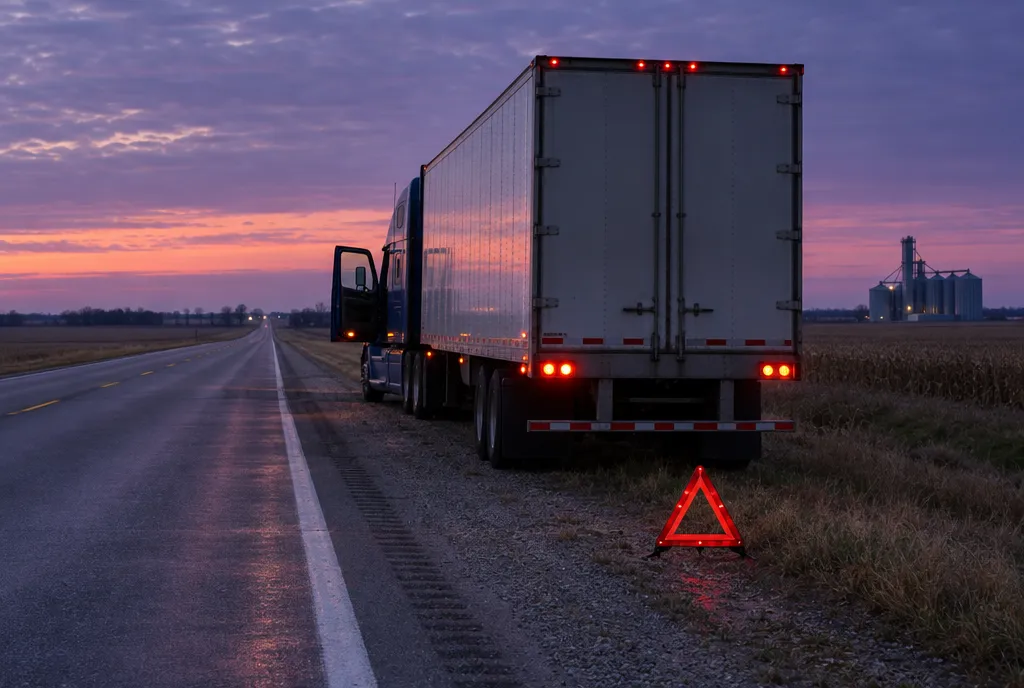
Three signs mean do not move the truck under its own power: RPM that runs away with no road speed, a transmission that commands neutral at road speed, and a howling axle housing hot to the touch. Hard cold shifts, a slow range shift, a weeks-old whine or an AMT that lights the lamp but holds its gears can be driven in, gently. Truck Clinic does not offer roadside assistance or mobile service; the truck comes to the shop in Romeoville, just off I-55 near the Weber Rd exit. 49 CFR 396.3 requires parts and accessories to be in safe and proper operating condition at all times; a transmission that will not hold a gear is not that.
Talk to Truck Clinic
If a truck is slipping, grinding, lighting a transmission lamp or howling at highway speed, call Truck Clinic at (815) 887-0212 or request a quote with the make, the transmission type and what the driver noticed, and we will tell you whether to drive it in or load it. Transmission and differential repair is done in the bay at 565 Anderson Dr Unit B, Romeoville, IL 60446, with a written quote before anything is opened, for fleets running I-55 out of Joliet, Bolingbrook, Plainfield and Naperville.