If you've had a truck go down at the worst possible time, you already know the shop matters more than the tow. How to choose a truck repair shop comes down to a short list of questions asked before the first job instead of after a comeback: who works on the truck, how they prove the fault, what you sign before work starts, and what turnaround really depends on.
Below are the questions to ask a truck mechanic, the answers that should end the conversation, and what a fleet on the I-55 corridor should expect from a shop near Chicago.
For the Romeoville shop, start with the best truck repair shop checklist, then use these questions when you call.
Does the shop work on trucks like yours every day?
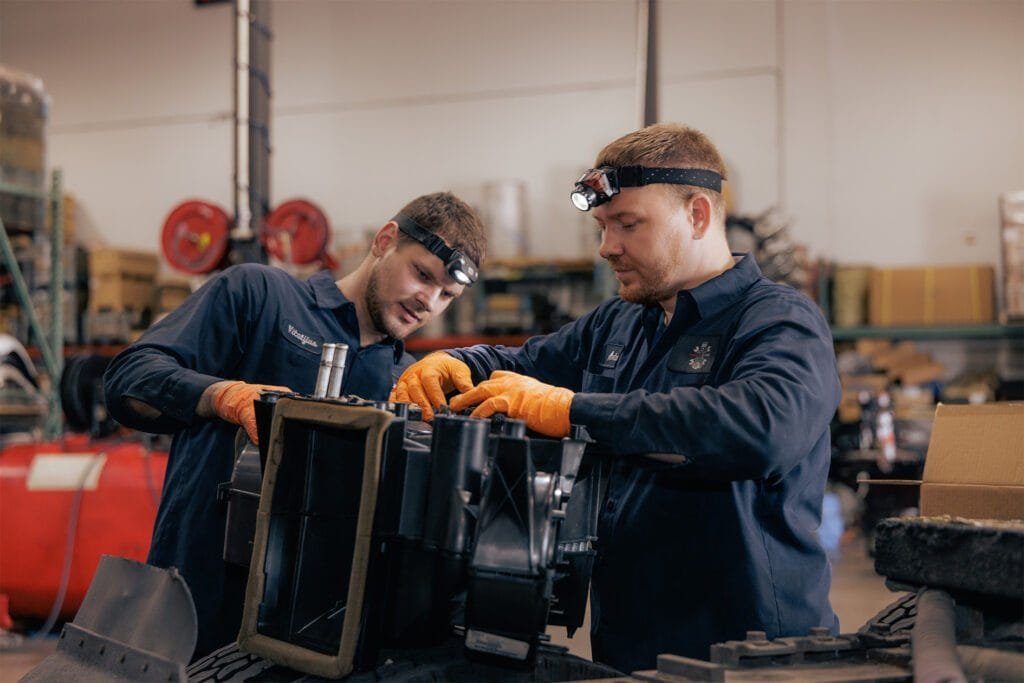
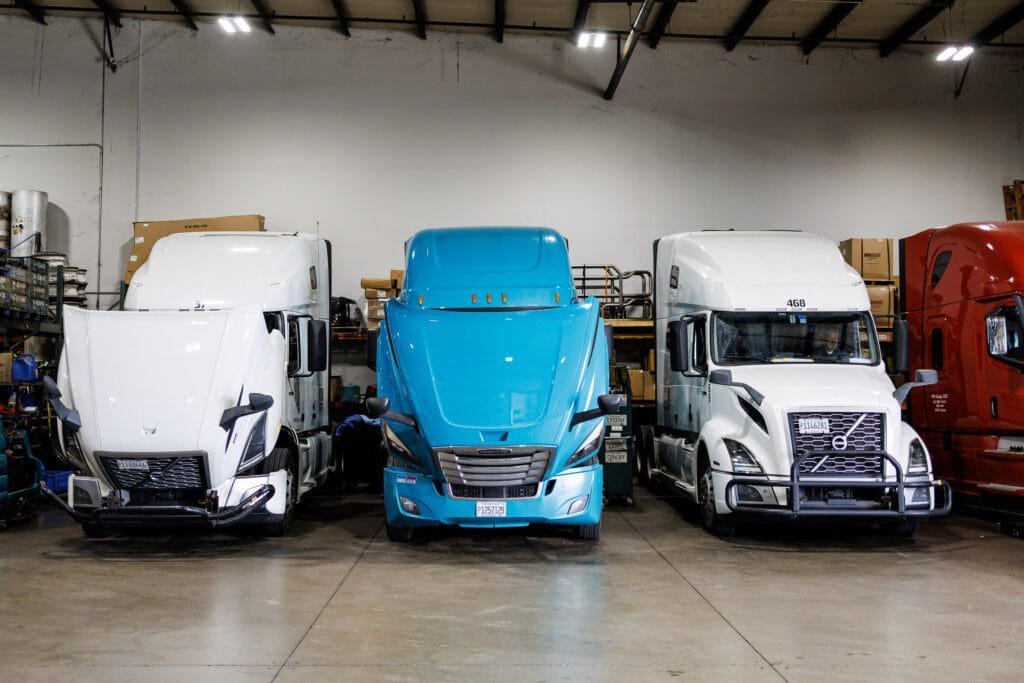
Start here, because a good light-duty shop can change oil on a Class 8 and still be the wrong place for it. Heavy-duty work needs a bay long enough for a tractor with the trailer still hooked, a lift or pit rated for the axle weight, air-brake and wheel-end tooling, and software that reads J1939 data, commands a forced regen and runs a cylinder cutout test.
Ask what share of the work is Class 7 and 8, whether the shop touches trailers, and whether aftertreatment stays in-house. Then a quick test: ask what they did with the last truck that came in derated. "Cleared the code and sent it out" means that truck came back, because a derate has a cause and the code is only the symptom.
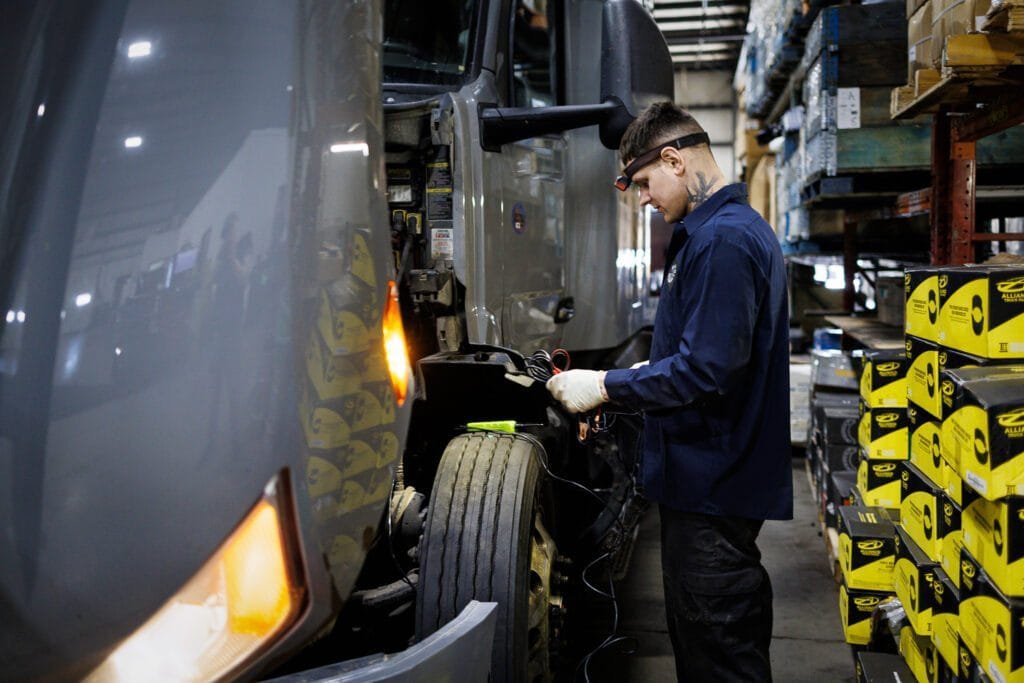
Truck Clinic keeps fifteen services in-house, diagnostics included, and a team of 65-plus employees in Romeoville.
What questions should you ask a truck mechanic before the first job?
Ask these before a unit is dropped; a shop that does the work well will not mind.
- Which diagnostic software do you run, and what can it command? Reading codes is the floor. You want forced regens, parameter checks, cylinder cutout and boost tests, and live data with the engine running.
- What do you do before you replace the part a code points at? The right answer names a test: a pressure reading, a leak-down, a load test, a scope trace. The wrong answer is "the code said the sensor."
- Do I get a written quote before anything is opened or ordered? And when the job grows once the truck is apart, is it a call and a revised approval, or a surprise on the invoice?
- Who performs the annual inspection? The inspector has to meet 49 CFR 396.19, and the shop should be able to name that person.
- Do you fit OE or aftermarket parts, and will the quote say which? Both have a place, but the OE versus aftermarket call is yours, not the parts counter's.
- What does turnaround depend on here? Bay time, parts, or both. A shop that can explain its own bottleneck has thought about yours.
- Who is my one contact, and if the repair comes back, what happens first? A name, a channel, and a re-diagnosis before anyone talks about a second bill.
- Does the invoice carry the unit number, the date and the nature of the work? That is what a 49 CFR 396.3 maintenance record has to show.
How do you know a shop diagnoses instead of swapping parts?
The difference shows up between the code and the parts order. Take a DEF pressure fault, SPN 4334. A parts-swapper orders a DEF pump because the code says pressure. A diagnostician pulls the DEF pump filter first, because a plugged filter starves pressure the way a dead pump does, then commands a pump prime and watches whether pressure builds, then follows the suction line for a crushed section. Same code, three fixes, one pump.
Boost is the other classic. SPN 102 with low boost gets a turbo ordered at plenty of shops, but a split intercooler boot, a cracked charge-air cooler or a sticking VGT actuator sets the same code. A boost leak test and an actuator check, the turbo test sequence, settle it before a turbo is on order.
Drivetrain complaints work the same way: a truck that slips or grinds should get a clutch and fluid check before anyone quotes a rebuild, and the semi truck transmission failure signs show what to tell the shop on the phone. Verify, then replace, then record what was measured — that fault-code strategy separates the shop you keep from the one you leave.
How should a truck repair quote work?
In writing, before the work, with diagnosis, parts and labor on separate lines and each part marked OE or aftermarket. Then an approval step: nothing is opened or ordered until you say yes, and if the technician finds more once the truck is apart, the job stops and you get a call with a revised quote. Truck Clinic runs in that order: diagnose, write up what was found, quote, wait for your approval.
Notice what is not on that list: a number. What a shop charges matters less than whether the figure exists before the work does. The lowest quote is usually the one that replaces the part the code named and nothing else, and when that truck comes back on a hook two weeks later, the real cost of the breakdown dwarfs the gap between the quotes.
What does turnaround on a truck repair really depend on?
Every shop says it is quick. Ask instead what turnaround depends on, and the honest answer has three parts: an open bay, the part on the shelf, and a confirmed fault. A shop can turn a same-day job when a bay is open and the part is common; it cannot promise that for a truck arriving at 4 PM with an intermittent electrical fault. Truck Clinic works the same way: same-day when a bay is open, never as a promise.
Then ask what happens when the truck cannot be driven in. Truck Clinic is shop-based, with no roadside assistance, no pickup or delivery and no mobile service, so the plan for a dead truck is a tow to 565 Anderson Dr and a bay ready when it lands. Write any shop's answer into your breakdown plan next to the tow operators' numbers.
Scheduled fleet maintenance keeps most units out of the emergency queue in the first place.
Which answers are red flags when you choose a truck repair shop?
The same questions, with the answer that ends the conversation.
| Question | Answer you want | Red flag |
|---|---|---|
| How do you handle a fault code? | A test before a part: pressure, leak-down, load test, scope | "We replace what the code says" |
| Do I get a written quote first? | Yes, itemized, approved before anything is opened or ordered | "We'll know when we're in there" |
| OE or aftermarket? | Your choice, stated on the quote, with a reason | Whatever the counter had, unlabelled |
| Who does the annual inspection? | A named inspector who meets 49 CFR 396.19 | "Anyone in the shop" |
| What is turnaround? | Bay, parts and diagnosis, and they say which | A flat promise with no conditions |
| What happens if it comes back? | Re-diagnose first, then talk | A second bill before a second look |
| Can I see the old parts? | Yes, bagged and on the pallet | Already thrown out |
Ask for the old parts on every job. A cracked EGR cooler core or a melted DPF substrate says more about how the truck is being run than the invoice does.
What should a Chicago fleet expect from a truck repair shop?
A truck repair shop in Chicago or its suburbs sees wear a rural interstate shop does not. Short intermodal drays out of Joliet never get the exhaust hot enough to finish a passive regen, so DPFs load early and forced regens become routine. Stop-and-go on I-55, I-355 and the Bolingbrook corridor wears brake linings and slack adjusters ahead of the mileage interval. Potholes hammer air springs, shocks and tie-rod ends, and from November to March salt and brine eat brake lines, frame rails and connectors.
Ask a local shop how it handles those four things. Then do the distance math: a tow from the Joliet intermodal yards to a shop across the city is a cost you can design out with a shop minutes off I-55 in Will County. Owner-operators in Lockport and Homer Glen who park a tractor at home need maintenance planned around that schedule. The long end of that distance math is the distribution and manufacturing fleets in the Eola Rd parks: Aurora is about 30–40 minutes off-peak by I-88 and I-355. The winter prep routine and the common fleet failures guide cover the rest.
Talk to Truck Clinic
If you run trucks in Romeoville, Joliet, Bolingbrook, Naperville, Plainfield, Aurora or anywhere in the Chicago metro and want to put these questions to us, call Truck Clinic at (815) 887-0212 or request a written quote. The shop is at 565 Anderson Dr Unit B, Romeoville, IL 60446, just off I-55, open Mon–Fri 7:00 AM–5:00 PM and Sat 7:00 AM–12:00 PM.