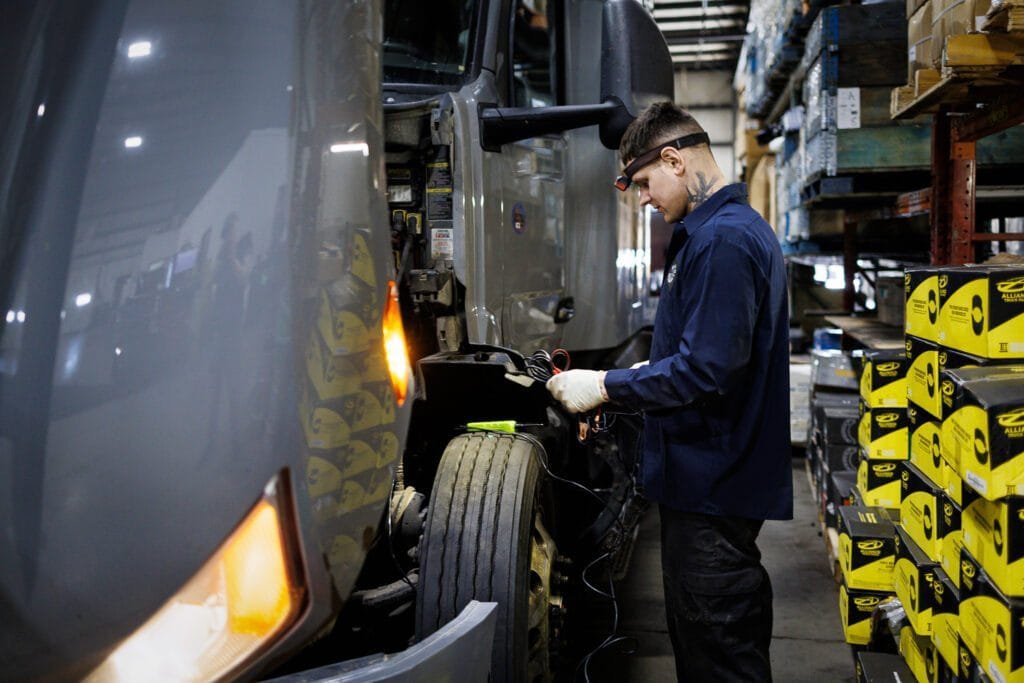
If you've watched a truck sit in the yard with a DPF lamp on while a load waited, you already know the filter picks its own timing. The straight answer to "how often should DPF be cleaned" is: when the ash load and the regen history say so. The OEM interval is a starting point written for a highway truck on clean fuel that is not burning oil, and most trucks working the I-55 corridor out of Romeoville are not that truck.
How often should DPF be cleaned on a commercial truck?
Two things build up in a diesel particulate filter, and only one burns off. Soot is combustion carbon; passive regeneration on highway pulls and active regeneration, where the ECM adds fuel to raise exhaust temperature, take care of it. Ash is the mineral residue from oil additives. It does not burn, every regen packs more of it into the cells, and the only way out is off-truck cleaning.
So the cleaning interval is really an ash interval. Most OEMs publish one as a mileage or engine-hour figure that assumes long runs at operating temperature and normal oil consumption. Treat it as the latest point to look, not the date to clean.
The truck knows better than the calendar. The ECM estimates ash load (SPN 3720) and soot load (SPN 3719) and logs every regen. When the ash estimate nears its threshold, active regens bunch closer together, or differential pressure across the filter (SPN 3251) stays high after a completed regen, the filter is due.
Which signs mean the DPF is due for cleaning now?
- Active regens happening more often than last season on the same route
- Differential pressure that stays high right after a successful regen
- An ash-load estimate near its limit, or an ash-accumulation fault
- Fuel economy slipping with no change in load, route or driver
Any two together are a cleaning trigger, whatever the odometer says.
What changes the DPF cleaning interval from one truck to the next?
Two identical trucks bought the same month can hit their ash limit a season apart.
Duty cycle. Short-trip, stop-and-go and heavy-idle work never get the exhaust hot enough for passive regen, so the ECM runs more active regens, and each one adds ash. A delivery truck running Bolingbrook to Joliet all day loads its filter far faster than a sleeper cab on the interstate.
Oil consumption and engine health. Ash comes mostly from oil. A truck burning oil past worn rings, valve guides or a tired turbo seal feeds ash straight into the filter, and a leaking injector or EGR fault raises soot output, which raises regen frequency, which raises ash. If a truck suddenly needs cleaning early, look upstream before blaming the filter.
Season. Cold starts make more soot, and short-trip trucks working a Chicago winter load their filters noticeably faster than in July, which is why the fall checkup in our winter prep guide includes an aftertreatment review.
Why is the DPF regen not working, and does the filter need cleaning?
A regen that will not start or finish is a symptom, not a diagnosis; cleaning the filter fixes it only some of the time. A DPF regeneration failure gets sorted in this order, because one lamp covers a dozen causes.
- Read the codes and the regen history. Active codes say what the ECM is protesting; the history says whether regens have been aborting, inhibited, or completing without clearing the pressure.
- Rule out an inhibited regen. The ECM refuses a parked regen until its interlocks are met: parking brake set, transmission in neutral, PTO off, coolant at operating temperature, adequate fuel, no active aftertreatment fault.
- Look for temperature problems. The ECM aborts a regen it cannot bring to target temperature: a drifted exhaust temperature sensor, an exhaust or boost leak ahead of the DPF, or a diesel oxidation catalyst that no longer lights off.
- Check the dosing hardware. A coked hydrocarbon doser or a sticking injector produces a regen that starts, stalls and sets a temperature fault.
- Compare soot load against the lockout. Past a soot-load threshold the ECM stops offering a parked regen, because burning that much soot at once can crack the substrate, and it derates instead. That filter needs a tool-initiated service regen or, past the next threshold, off-truck cleaning, and the overload still has to be explained.
- Only then decide on the filter. If the regen system is sound and the filter still will not clear, ash is the likely reason and cleaning is the answer.
If the truck is already in a power or speed derate, what the derate code is telling you comes first; a derate reset without the cause fixed just schedules the next one. The NOx side throws identical lamps, and our guide to DEF and SCR failures covers telling them apart. Proper diagnostics with freeze-frame data get there without swapping parts on a guess.
DPF clean or replace: how do you tell which one the filter needs?
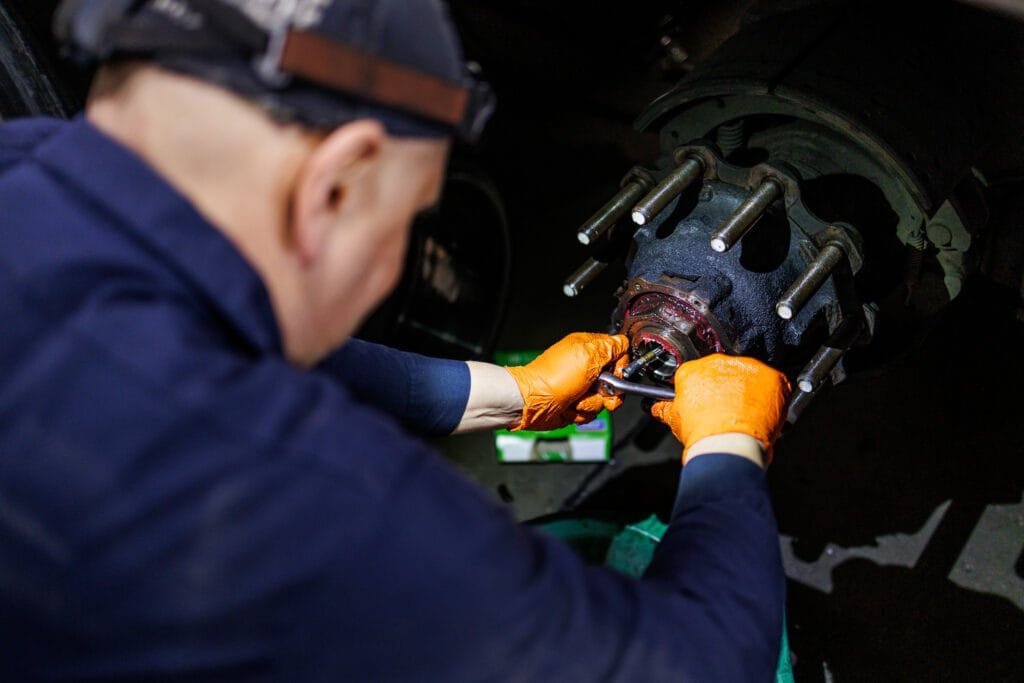
The DPF clean or replace decision is made by inspection and a flow test — not by mileage or by how many times the lamp came on. A proper cleaning weighs the filter and measures airflow through it, cleans, then measures again. If the numbers return to spec, the filter goes back on. If not, the substrate is damaged and a second cleaning wastes the money.
| What the inspection finds | Verdict | Why |
|---|---|---|
| Ash-packed cells, substrate intact, flow returns to spec | Clean | Ash removal restores capacity |
| Face plugged with soot from a regen system fault | Clean, after the regen fault is fixed | The filter is fine; the heat source was not |
| Cracked or melted cells from an uncontrolled soot burn | Replace | Passes soot and sets a filter-damaged fault |
| Oil-soaked from a leaking turbo seal or an engine burning oil | Replace, after the oil source is fixed | Oil-bound ash rarely cleans out |
| Coolant contamination from an EGR cooler leak | Replace | Coolant residue glazes the substrate |
| Cleaned before, still restricted afterward | Replace | Residual ash is bonded into the cells |
An intact filter typically takes several cleanings, each recovering a little less capacity, so keep the before-and-after flow numbers on file; when they stop reaching spec, replacement is next. Our DPF cleaning and installation service does both, and the inspection decides which.
What drives DPF replacement cost, and what keeps it down?
The number on a replacement quote moves with four things, most of them inside a fleet's control. Every replacement at Truck Clinic starts with a written quote, and nothing is ordered until you approve it.
- The filter itself. The choice between an OE substrate and a reputable aftermarket unit depends on the engine and how long you plan to keep the truck; our guide to OE versus aftermarket parts covers that call.
- Whether the DOC goes with it. Whatever cracked or soaked the DPF often took the diesel oxidation catalyst too, and a new filter behind a dead DOC will not regen.
- Sensors, gaskets and clamps. Pressure sensors, temperature sensors and V-band clamps that have been through many heat cycles often come off in pieces.
- The upstream repair. If a turbo seal or injector put the filter in that state, that repair is part of the job. Skipping it means paying for the filter twice.
A DPF delete is not a way around the cost. The filter is required emissions equipment under federal heavy-duty emissions rules, and removing or disabling it is tampering. Fleets that run west should also know CARB's Truck and Bus Regulation expects a working filter on any truck entering California.
How do you stop the next DPF from failing the same way?
- Run the low-ash oil the engine calls for, on an interval that accounts for regen fuel dilution; our oil interval math post explains why
- Log oil consumption per truck and treat a rising trend as an aftertreatment warning
- Pressure-test the EGR cooler and check the turbo for shaft play at every major service; the turbo and EGR cooler guide covers both tests
- Have drivers let an active regen finish and report a DPF lamp the same day
- Record every cleaning date, ash reading and flow number per unit, and put regen history on the fleet maintenance program checklist
Talk to Truck Clinic
If a truck in your fleet is regenning too often, sitting in a derate, or due for cleaning and you want the filter inspected before anyone orders parts, call Truck Clinic at (815) 887-0212 or request a written quote. We are just off I-55 at 565 Anderson Dr Unit B, Romeoville, IL 60446, and serve Joliet, Bolingbrook, Naperville, Plainfield and the Chicago metro. Same-day work happens when a bay is open, and nothing is opened or ordered until you approve the quote.