
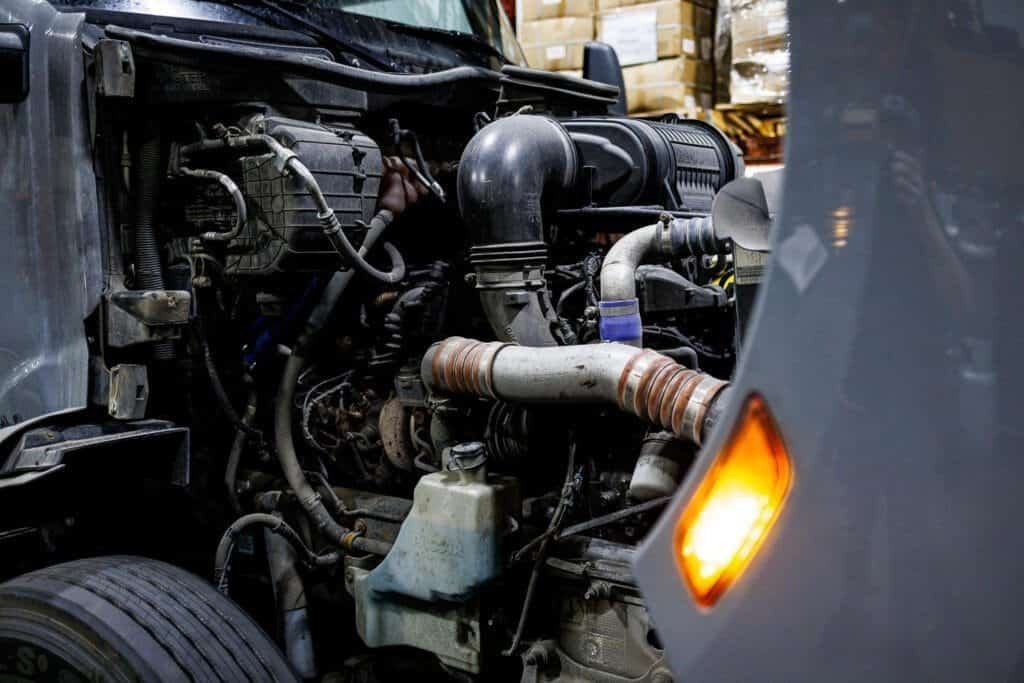
If a driver's medical card lapses, the truck is as parked as it would be with brakes out of adjustment. The DOT physical requirements are not a mystery: FMCSA sets them in 49 CFR 391.41, every examiner on the National Registry works from the same form, and the exam itself is a short appointment. Drivers who leave with a short card, or none, tend to lose it on blood pressure, missing paperwork or a condition they did not prepare for.
What are the DOT physical requirements for CDL drivers?
Any driver operating a commercial motor vehicle in interstate commerce has to pass the exam and hold a current medical certificate; Illinois applies the same standard to most intrastate CDL holders. The examiner has to be on FMCSA's National Registry, and the card runs a maximum of 24 months, less when a condition needs monitoring. The standards below come from 49 CFR 391.41.
| Requirement | Standard in 49 CFR 391.41 | How it is checked |
|---|---|---|
| Vision | 20/40 or better in each eye, corrected or not; 70-degree horizontal field; tells red, green and amber apart | Eye chart, field test, color plates |
| Hearing | Forced whisper at five feet, hearing aid allowed, or 40 dB average loss or less at 500, 1,000 and 2,000 Hz | Whisper test; audiometer if failed |
| Blood pressure | Under 140/90 for a two-year card; higher readings shorten it or disqualify | Cuff, repeated after rest if high |
| Urinalysis | Protein, blood, sugar and specific gravity; not a drug test | Dipstick on a urine sample |
The examiner also checks heart, lungs, spine, limbs and nervous system for anything likely to interfere with safe driving. A few conditions disqualify outright unless the driver qualifies under a specific program: a seizure disorder without an FMCSA exemption, insulin use without the 391.46 assessment, current alcoholism, use of a Schedule I drug, and loss of a limb without a Skill Performance Evaluation. Marijuana stays disqualifying under the federal rules regardless of a state card.
What should you expect during a DOT physical exam?
The sequence is the same at every clinic because the form is the same.
- Health history. You complete the driver section of Form MCSA-5875: every condition, surgery, hospital stay and medication, including over-the-counter drugs, plus any past denial.
- Vitals. Height, weight, pulse and blood pressure; a high first reading is usually repeated after you sit quietly.
- Vision and hearing. Distance chart, peripheral check, color plates, then the forced whisper from five feet.
- Urine sample. A dipstick for protein, blood, sugar and specific gravity.
- Hands-on exam. Heart and lungs, abdomen, hernia check, spine and joints, grip, reflexes and gait.
- The determination. The card (Form MCSA-5876) for up to 24 months, a shorter card, a pending determination while you bring back records, or a disqualification.
Since June 2025, registry examiners send the determination to FMCSA electronically, and FMCSA forwards it to the state licensing agency. Ask for a printed copy anyway and carry it until the state record shows the new date.
What blood pressure do you need to pass a DOT physical?
Blood pressure is where a two-year card most often becomes a short one, because the DOT physical blood pressure standard is a cliff, not a slope. FMCSA's advisory criteria set the tiers below.
| Reading | What the examiner does | Card length |
|---|---|---|
| Under 140/90 | Passes | Up to 2 years |
| 140–159 over 90–99 | Passes, with a note to get it managed | 1 year |
| 160–179 over 100–109 | One-time card so treatment can start; renew only once under 140/90 | 3 months, then annual |
| 180/110 or higher | Disqualified until controlled | 6 months once controlled |
Two details catch drivers out. Once you carry a hypertension diagnosis the examiner puts you on a one-year card even when the reading is well under 140/90. A driver who walks in at 162/98 leaves with a three-month card; the same driver who saw a doctor a month earlier leaves with a one-year card.
Do not walk in straight from a hard drive. Sit for five minutes, skip caffeine, nicotine and energy drinks for a few hours beforehand, take your usual blood pressure medication that morning, and sleep the night before. If home readings run in range, bring the log.
Which medications and conditions need paperwork at a DOT physical?
The examiner cannot take your word for anything that touches a disqualifying condition; letters go in the file, verbal explanations do not.
- Diabetes. Insulin users qualify under 49 CFR 391.46: the treating clinician completes Form MCSA-5870 within 45 days before the exam, you bring glucose records, and the card is capped at one year. Without insulin, bring your latest A1c and a provider's note.
- Heart conditions. After a heart attack, stent, bypass, pacemaker or arrhythmia, bring the cardiologist's clearance letter and any recent stress test; waiting periods apply.
- Sleep apnea. No federal rule sets a screening cutoff, so examiners use judgment. If diagnosed, bring the CPAP compliance download showing regular use.
- Vision or hearing below the standard. The alternative vision standard in 49 CFR 391.44 lets an eye specialist evaluate you on Form MCSA-5871. Hearing has a separate FMCSA exemption program with its own application, so start early.
- Controlled-substance prescriptions. Opioids, benzodiazepines, ADHD stimulants and sleep aids need the prescriber's written statement that the drug will not affect safe driving.
What should a driver bring to the DOT physical?
- CDL or state license
- Glasses or contacts, and hearing aids with fresh batteries
- A medication list with drug, dose and prescriber, including over-the-counter drugs
- Specialist letters, the MCSA-5870 form, CPAP report or exemption paperwork
- A home blood pressure log if your readings run borderline
- Your current card, so the examiner sees the last determination
How do you prepare for a DOT physical the week before?
- Book a National Registry examiner two to three weeks before the card expires. An exam by anyone else does not count, and a short card is manageable with time and a crisis without it.
- Fill in the health history at home, completely. Leaving off a condition is a federal violation, and it surfaces when a crash investigation pulls the records.
- Line up the paperwork now. Call each prescriber for the letters above; clinics do not turn these around overnight.
- Manage the readings for seven days. Cut salt and energy drinks, take blood pressure medication exactly as prescribed, and change nothing without the prescribing doctor.
- The morning of. A light breakfast rather than a sugary one that can push sugar into the sample, no caffeine or nicotine, and arrive early enough to sit still before the cuff goes on.
Where do you get a DOT physical near Romeoville?
Not at Truck Clinic. We are a truck and trailer repair shop in Romeoville, and the physical has to be performed by a medical examiner on FMCSA's National Registry: physicians, physician assistants, nurse practitioners, chiropractors and osteopathic doctors. The registry's ZIP code search lists every examiner around Romeoville, Bolingbrook, Joliet, Plainfield and Naperville, clinics and independent examiners alike. The listing is what makes the exam valid — not the sign on the door.
How does the medical card fit with the truck's DOT inspection?
They are two halves of one file — the driver's fitness in Part 391, the truck's condition in Part 396. At a roadside Level 1 inspection the officer starts with the driver's documents, so an expired medical card is found before anyone crawls under the trailer. The DOT inspection checklist covers the truck side item by item.
An expired card is a Driver Fitness violation on the carrier's record, and the state can downgrade the CDL if it has no current determination on file. Those points sit in the same CSA system as brake and lighting violations, and the 90-day CSA recovery plan starts by pulling every BASIC.
The practical fix is one calendar with each driver's card expiry, each unit's annual inspection date and its next service. When a driver is booked for a physical, bring the truck in that week for its annual DOT inspection so both dates renew together; a fleet maintenance program that tracks those dates survives staff turnover.
Talk to Truck Clinic
The physical is the driver's half of the compliance file; the truck's half is ours. If your fleet runs Romeoville, Bolingbrook, Joliet, Naperville, Plainfield or the wider I-55 and I-355 corridor, send the details through the contact form or call (815) 887-0212 to book the annual DOT inspection or a fleet service visit, and you get a written quote before anything is opened or ordered. The shop is at 565 Anderson Dr Unit B, Romeoville, IL 60446, open Mon–Fri 7:00 AM–5:00 PM and Sat 7:00 AM–12:00 PM.